
The Plant Room, Properly Kept
Chiller Maintenance Run on Logs, Not Luck Trended Plant. Cared-For Air Side. Budgets That Hold.
Central plant is where cooling stops being an appliance and becomes infrastructure: a chiller failure does not warm a room, it warms a building, and the repair bills carry commas. Our chiller maintenance Dubai programmes run the discipline that scale demands: every attendance logged and trended so faults surface as numbers seasons before they surface as complaints, the AHU and FCU air side serviced with the same seriousness as the plant, water treatment watched like the asset protection it is, and reporting that lets an owners association govern from evidence. Plant rooms reward routine; we supply it.
Owners associations served · Response windows in writing · Licensed & insured
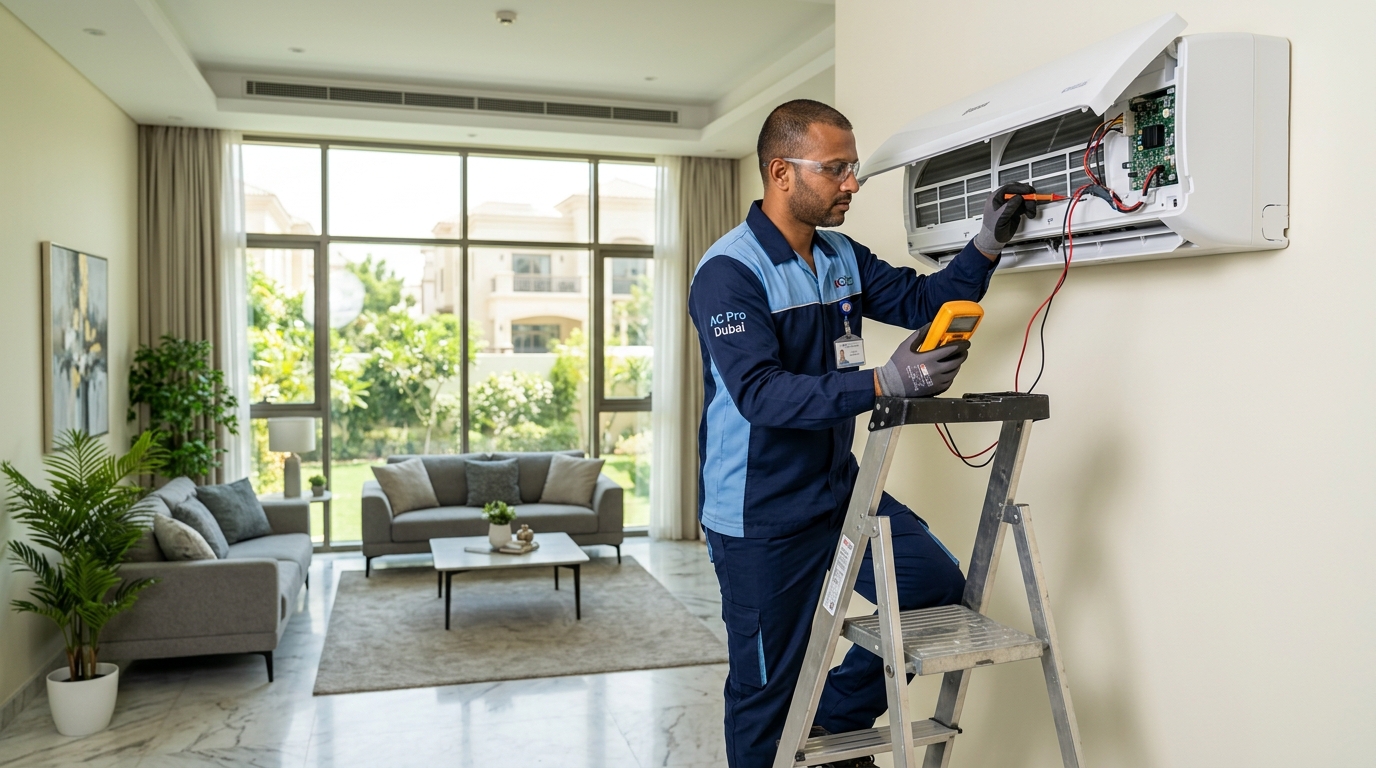
Full Scope
Everything a Central Plant Programme Covers
Central cooling is a chain running from the plant room to the furthest bedroom grille, and it always fails at its most neglected link. Six scopes cover the entire chain, priced and scheduled together as one programme with one responsible owner. Tenants almost always report a chiller fault as cooling loss long before the plant room shows one.
The Chillers Themselves
Approach temperatures trended, charges and oil checked against baseline, starters and safeties proven, vibration and amps watched for the stories they tell. The heart of the plant, examined like one, at every attendance.
Air Handling Units
The building’s lungs: coils treated, filters staged, belts and bearings managed on condition, dampers and controls verified. AHU FCU maintenance is where chilled water becomes comfort, or quietly fails to.
Fan Coil Units at Scale
Hundreds of small units, one discipline: coils, trays, drains, valves and thermostats serviced floor by floor on a rotation that reaches every apartment before summer tests it.
Water Treatment Oversight
Chemistry results reviewed every attendance, scale and corrosion trends flagged early, and the treatment contractor held to numbers. The cheapest asset protection in the building, verified rather than assumed.
Pumps, Motors and Electricals
Primary and secondary pumps, motor health, starter panels and control circuits: measured, logged and maintained on condition at every attendance, because distribution failures warm a building exactly as thoroughly as chiller failures do.
The Distribution and Controls
Risers, valves, sensors and the building management system settings that balance it all across the floors. Verified against the original design, corrected against years of drift, and documented so the next decade inherits a known, mapped system.
The Discipline
Why Logs Beat Everything Else in a Plant Room
Plant maintenance has exactly one genuinely non-negotiable habit, and most of this page’s value flows directly from it. Four sections on the log, the trend, and the five-figure failures the two of them quietly prevent. Carrier plant is common in Dubai towers, and Carrier AC service in Dubai follows the same logbook rules.
The Log Is the Plant’s Memory
A chiller reading means little alone; against last quarter’s it becomes a diagnosis. Approach temperatures creeping tell of fouling tubes, amps drifting tell of mechanical load, oil trends tell of bearing life. Every attendance we make enters the record, and the record does most of the diagnosing.
Adopted plants arrive with gaps where their history should be, which is why our first act is always a baseline: the trend has to start somewhere, and the day it starts is the day the plant stops being run blind.
Failures Are Bought Years Earlier
Almost no chiller dies suddenly. The compressor that seizes in August was flagged by oil analysis in spring; the tube leak was scale chemistry ignored for two years; the pump that stripped its bearings had been vibrating for months. Plant failures are purchases, made by whoever declined the readings.
The programme’s economics live here: attendance costs are steady and small, while the failures they intercept are rare and enormous. An owners association that funds the log is buying insurance where the premiums repair the building.
The Air Side Is Half the Truth
Warm complaints in a central building split their causes: half plant, half air side, and the air side hides better. A tower can hold perfect chilled water temperatures while matted FCU coils and tired AHU belts starve every apartment of the benefit. Chiller servicing that stops at the plant room door is half a programme.
Ours walks the whole chain on rotation, which is why our warm-complaint numbers fall in adopted buildings even when the plant itself needed nothing: the water was always cold, and finally the air admitted it.
A Tower, Brought Back
An owners association came to us mid-crisis: rising complaints, a plant with no usable log, and a five-figure replacement quote for a chiller condemned on age alone. Our baseline told a different story: fouled condenser tubes, a water treatment programme that existed only on invoices, and FCU coils across two floors thick enough to card wool.
Tubes cleaned, treatment restarted against numbers, air side rotated through, and the condemned chiller has since run two summers inside its design approach. The building bought a log instead of a chiller, and the difference funded their painting programme. Plants rarely need heroics; they need witnesses.
Why AC Pro
Why Boards and Building Managers Choose Us
Plant clients sign for years at a time, so the choosing is properly careful. Six working habits that survive board due diligence and keep surviving every AGM that follows.
Numbers Over Narratives
Every recommendation arrives with the readings that earned it. Boards decide from trends and costed options, never from alarm language or a technician’s mood.
Both Sides of the Chain
Plant and air side in one programme, one rotation, one report. The chain is only as cold as its worst link, so we maintain the chain, not the room with the nameplates.
Water Chemistry Watched
Treatment results reviewed at every attendance and the contractor held to numbers, because tube damage from chemistry neglect is the most preventable five-figure bill in the building.
Board-Ready Reporting
Plain-language summaries above technical logs, spending against budget, risks ranked and costed. Governance paperwork that a treasurer files and a resident understands.
Adoption Without Judgement
Neglected plants get a truthful baseline and a phased recovery, not a lecture. The lost years are sunk; the log starts the saving immediately.
Escalation Agreed in Advance
Emergency paths, authorisation limits and response windows written before they are needed. At 2 AM nobody should be inventing procedure.
Plant Rooms in a Furnace Climate
Dubai asks more of central plant than almost anywhere it is installed: condensing against extreme ambient heat for months, cooling towers evaporating hard against humidity, and load profiles that hold plants near their ceilings from May to October. Design margins that idle in milder cities work for a living here, and the difference between a trended plant and a neglected one is measured in years of asset life.
The same climate makes the discipline pay faster: fouling accumulates quicker, chemistry drifts harder, and the log catches all of it while it is still cleaning-money. In this city, a plant room maintained on evidence is not best practice; it is the only version of ownership that pencils out.
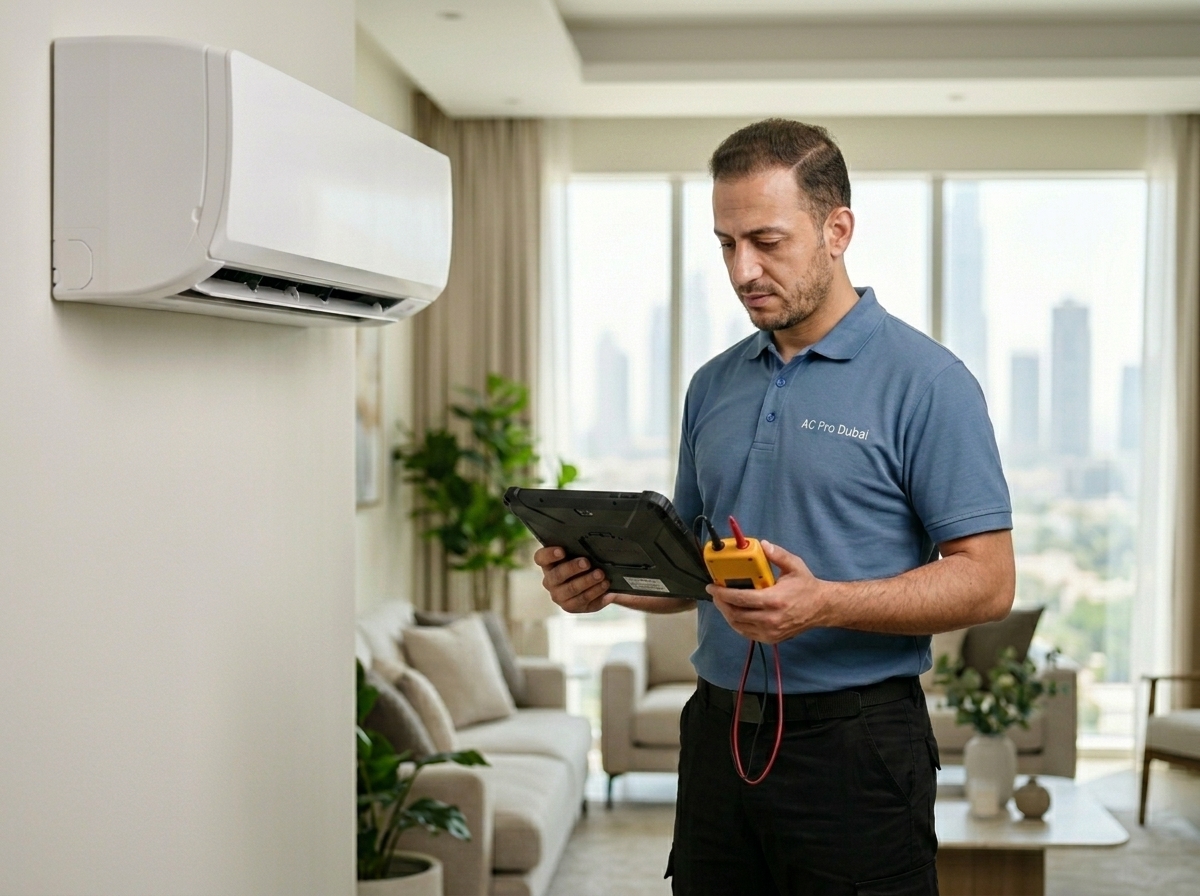
Onboarding
From First Walkthrough to Trended Plant
Five steps from first enquiry to a plant that effectively diagnoses itself through its own accumulated record, with the board informed and in control at every stage.

- Walk us through the building
Plant type and age, AHU and FCU counts, the complaint history and whatever logs exist, if any. Boards should bring the budget reality along too; proposals always work better against truth than against optimism.
- The baseline survey
Every reading captured and baselined, every scope condition-graded, the backlog ranked by risk and by cost. The building’s first honest snapshot in years, and it stays yours regardless of what follows.
- A programme in plain terms
Attendance frequencies, air-side rotation, treatment oversight, response windows and rates, itemised for board approval and benchmarked against the published list.
- Backlog cleared in phases
Inherited risks retired worst-first on planned spending, never as one crisis invoice. The plant earns its trend line while the budget keeps its shape.
- Steady state on the log
Attendances on calendar, trends reviewed, reports filed, and the plant’s future visible quarters ahead. Renewal decisions, in our experience, make themselves.
For the Board
Owning Central Plant Without Owning Surprises
Plant decisions are governance decisions before they are technical ones: budgets, duty of care and a building full of stakeholders watching both. Four notes written specifically for the people who carry that weight. The same logbook discipline covers the split AC units serving back-of-house areas in the same building.
The Budget Case, Stated Plainly
A maintained plant spends steadily and predictably; an unmaintained one spends rarely and catastrophically, and the catastrophe arrives with rental chillers, emergency rates and an EGM. Boards comparing programme costs against zero are comparing against a fiction; the real alternative number has commas and arrives in August.
Our proposals put the comparison in writing per building: programme cost against the failure exposure the log retires. Treasurers tend to approve quickly once the second column is honest.
Duty of Care Runs Through the Plant Room
Cooling in this climate is habitability, and boards carry that duty. A logged, trended, professionally attended plant is the demonstrable version of taking it seriously: evidence of diligence if questions ever arrive, and comfort delivered daily so they rarely do.
The air side belongs in that duty too: residents experience FCUs, not chillers, and a rotation that reaches every apartment is what the duty looks like at the grille. Our maintenance discipline scales from single homes to that whole-building rotation.
Read the Service Charge Honestly
Whether your building runs its own plant or buys district cooling, the service charge maintains a specific scope, and vagueness about that scope is where disputes breed. Our reports name the boundary on every finding: plant-side, air-side, utility-side, unit-owner-side.
Boards use that clarity to route costs correctly and to answer the perennial AGM question, what are we paying for, with documents instead of assurances. Clear boundaries are cheaper than any argument about them.
Plan Replacements Like a Board, Not a Casualty
Every plant has a retirement date, and the log predicts it years out: efficiency trends, parts availability, refrigerant phase-outs and repair frequency all converge visibly. Boards that watch the convergence replace in planned budget cycles at competitive prices; boards that do not, replace in August at any price quoted.
For buildings weighing central plant against alternatives at replacement time, the central AC in Dubai page covers the system choices, and one message to the contact team starts the feasibility conversation early, which is the only cheap time to have it.
Client Stories
Three Plants, Back on the Record
Three buildings, three very different plant stories, and three boards that now govern their cooling from evidence instead of estimates.
“Our tower’s chiller was condemned by age and quoted for replacement at a number that would have emptied the reserve fund. Their baseline found fouled tubes and fake water treatment instead. Two summers later the same chiller runs inside design figures, the log goes to every board meeting, and the reserve fund is intact. Witnesses, not heroics, exactly as they said.”
“As building manager I inherited a plant with no history and a complaints inbox. Their programme gave me both halves: plant trended quarterly, FCU rotation reaching every floor, and reports I forward to the board unedited. Warm-air complaints are down to almost nothing, and for the first time I can answer what are we paying for with a document.”
“Our hotel runs its own plant and downtime is unthinkable. They took over mid-neglect, phased the backlog through low seasons, and the escalation paths mean my night team knows exactly who authorises what. Two years, zero guest-hours lost to cooling, and the chief engineer’s handover file finally reads like a system instead of a mystery.”
Plant FAQs
Chiller Maintenance Dubai: Board-Level Answers
The questions owners associations, building managers and chief engineers across Dubai ask before committing their plant to anyone, answered at board level.
What does chiller maintenance actually involve?
Disciplined, logged, unglamorous work: condenser and evaporator performance trended through approach temperatures so fouling shows up in numbers months before capacity complaints; refrigerant charges and oil condition checked against baseline; pumps, motors and starters inspected electrically and mechanically; water treatment results reviewed because chemistry failures destroy heat exchangers quietly; safeties and controls proven rather than presumed; and every reading entered in a log that turns the plant’s history into its diagnosis. A chiller is a system of systems rather than a single machine, and real maintenance walks every one of them on a calendar rather than waiting for the loudest to complain.
Who actually needs chiller servicing, and is this page for my building?
If your property cools through a central plant, this page is yours: residential towers where the owners association carries the plant, commercial buildings and hotels running their own chillers, mixed-use developments with podium plants, and villas or compounds large enough to run mini-chillers. If your building buys cooling from a district network instead, the plant belongs to the utility, but everything downstream, the AHUs, FCUs and distribution your service charge maintains, still needs exactly the care described here, and we serve both arrangements daily across towers, hotels and commercial buildings citywide.
What is AHU and FCU maintenance, and why does it matter as much as the chiller?
The chiller makes cold water; air handling units and fan coil units turn it into cold rooms, and a neglected air side wastes a healthy plant completely. AHU care covers coils, filters, belts, bearings, dampers and condensate systems on the big air movers; FCU care runs the same discipline at room scale across dozens or hundreds of units. Buildings that service the plant and ignore the air side get warm complaints with perfect chiller logs, which is why our programmes always price and schedule both sides together as one responsibility.
How much does chiller maintenance cost in Dubai?
Honestly: from a survey, because plants differ more than any residential equipment. The shape of the pricing is predictable though: an annual programme scales with plant capacity, redundancy and criticality; AHU and FCU counts drive the air-side schedule through our published per-unit logic; and quarterly versus monthly attendance follows how much the building tolerates risk. Owners associations typically find the programme costs a fraction of one uninsured compressor failure, and the proposal itemises every line before anyone signs. The AMC framework supplies the contract bones.
Our chiller still cools. Why spend on maintenance now?
Because chillers fail expensively and announce cheaply. Rising approach temperatures, drifting amps, oil analysis trends and water chemistry excursions all telegraph seasons ahead, and every one is readable during routine attendance for a fraction of what the failure costs: a seized compressor on a packaged chiller is five figures plus a building full of angry residents in August. The still cools test is how buildings end up funding emergency rentals. Logged installations schedule their own spending calmly; unlogged ones have it scheduled for them by failure, always at the worst possible price and usually in the worst possible month.
What is water treatment and why do you keep mentioning it?
Chilled and condenser water is the plant’s bloodstream, and untreated it eats the plant: scale insulates heat exchangers into inefficiency, corrosion thins pipework toward leaks, and biological growth fouls systems while creating the health risks no building wants in a cooling tower. Treatment programmes dose against all three and prove it with regular testing. We review the results as part of every attendance because treatment failures surface as our problems, capacity loss and tube damage, and catching a chemistry drift early remains the single cheapest save available anywhere in this whole discipline.
Can you take over a plant that has been poorly maintained?
Yes, and it is some of our most valuable work. Adoption starts with a full condition survey: every reading baselined, backlog faults ranked by risk and cost, and the honest state documented so the owners association budgets from truth rather than inherited fiction. The backlog then clears in planned phases, worst risks first, and the plant moves onto a proper log-and-trend routine. Most neglected plants are recoverable at surprising value; the tragedy is only the money already lost to running them blind. The baseline survey stops that loss on the day it is written, which is why we insist on it before any programme begins.
Do you serve owners associations, and how does reporting work for boards?
Owners associations are half our plant clientele, and the reporting is built for board realities: plain-language summaries above the technical logs, spending mapped against the approved budget, risks ranked with costed options rather than alarm language, and year-over-year trends that make AGM questions answerable in one slide. Building chiller maintenance is ultimately a governance duty for boards, and our paperwork treats it that way: evidence a treasurer can file, an auditor can verify and an ordinary resident can actually understand.
What happens if the chiller fails outright? Can you handle emergencies?
The emergency line covers plant clients around the clock, with response windows written into every programme and escalation paths agreed in advance: which failures justify overnight callout, who authorises spending at 2 AM, and what interim measures bridge while parts arrive. The honest goal of everything else on this page is making that paragraph decorative: trended plants very rarely fail outright, because the failure was visible in the trend two quarters earlier and got retired as a planned line item instead of arriving as a building-wide crisis.
Our tower runs on district cooling. What should our service charge actually maintain?
Everything from your building’s side of the energy transfer station onward: the heat exchangers, pumps, and the whole air side, risers, AHUs and every apartment’s FCUs, plus the controls that balance it all. District cooling maintenance disputes usually grow from that boundary being vague, so our reports name which side each finding sits on, exactly as our commercial programmes do for tenant-landlord lines. Residents feeling warm air in a district-cooled tower are almost always feeling air-side neglect rather than utility failure, and the good news is that it is entirely and affordably fixable.
Let’s Talk Cooling
Start With the Baseline
Describe the building, its plant and its history, and the survey comes back as an honest condition report plus an itemised programme the board can actually vote on. Central cooling governed from evidence, rather than hoped about, starts with this one message.
Request Your Fixed Quotation
Free survey for installations · fixed quote within 48 hours · submits straight to our WhatsApp.